Water is something we use every day without thinking about it. I wanted to understand it better, so I carried out two projects at home: one to compare different types of water, and one to clean polluted water using nature’s own tools.
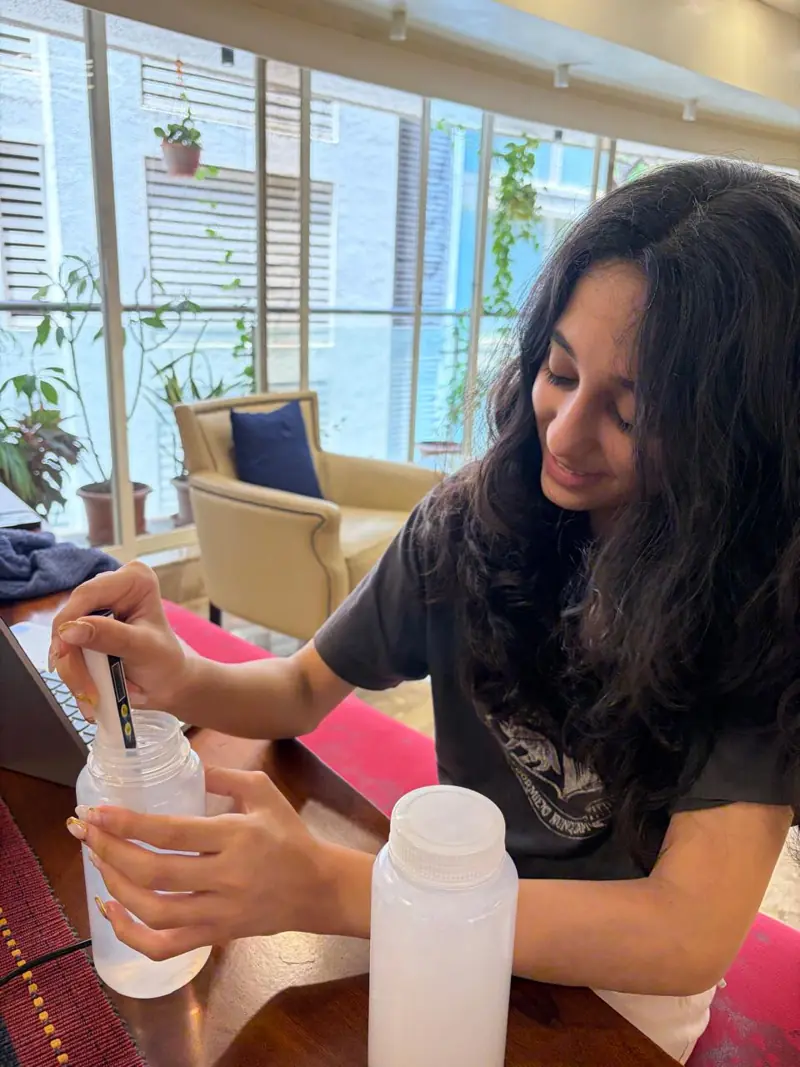
Setting up my water tests at home.
Experiment 1: Comparing five kinds of water
I collected tap water from home, RO (reverse osmosis) water, bottled mineral water, seawater and rainwater. For each one I recorded colour, odour, pH, sediment, how well soap lathered, and Total Dissolved Solids (TDS).
| Sample | pH | TDS (ppm) |
|---|---|---|
| Tap water | 7 | 62 |
| RO water | 7 | 23 |
| Mineral water | 8 | 243 |
| Rainwater | — | 41 |
| Seawater | 8.5 | — |
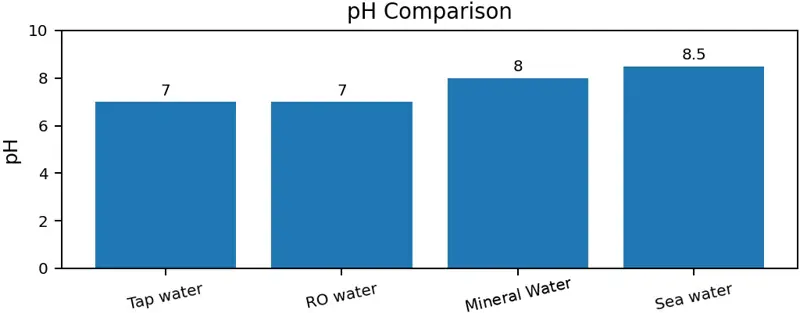
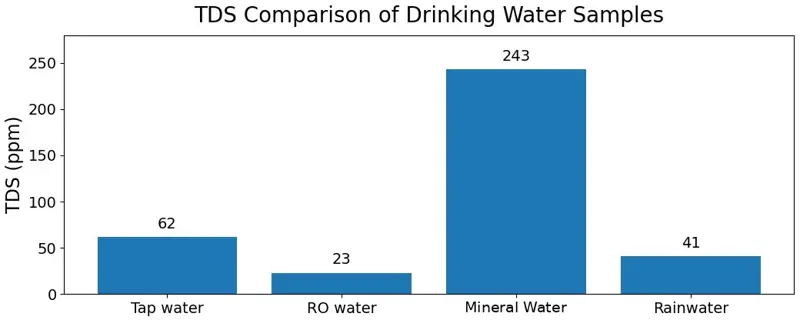
pH and TDS results for each sample.
The result that made me check twice
I expected mineral water to come out on top. So when our tap water showed a TDS of 62 ppm and the bottled water 243 ppm, I checked the labels twice. For a few minutes, I thought I had proved that tap water was better.
Then I read up on what TDS actually measures. It is not a safety score. It measures everything dissolved in the water — and many of those substances are useful minerals. My tests also couldn’t detect bacteria, viruses, heavy metals or other contaminants. The numbers hadn’t changed, but my understanding of them had. It was my biggest lesson: data only means something when you know what it measures.
Experiment 2: Letting nature clean the water
That lesson led to my passion project, Compact Bioremediation System for Water Quality: Biological Approach to Water Purification, which is now filed with the Copyright Office, Government of India.
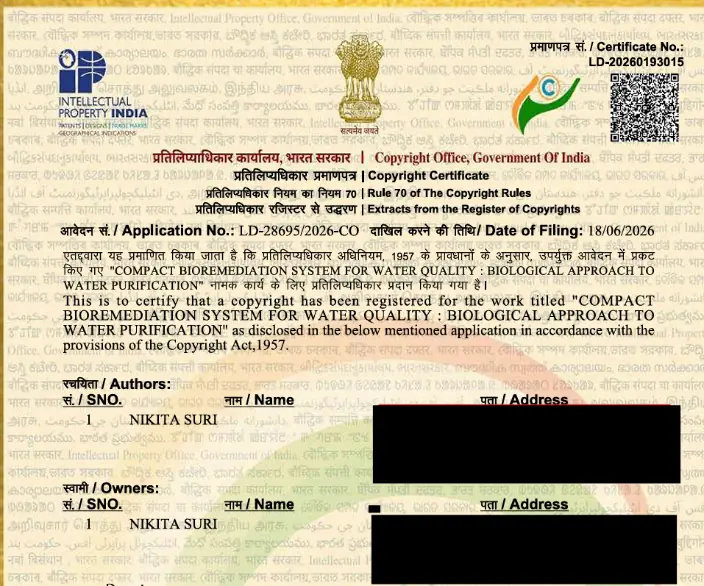
My copyright certificate from the Copyright Office, Government of India.
The problem is close to home. All four of Mumbai’s rivers remain in the Central Pollution Control Board’s most polluted category, despite more than a decade of restoration spending. I wanted to test, on a small scale, whether a combined biological treatment could help.
I filled two jars with 800 mL each of the same synthetic wastewater, made with dechlorinated water:
- Jar 1 (control): left untreated.
- Jar 2 (experiment): given a commercial mixed bioculture (helpful bacteria), continuous aeration from a small pump, and a rooted cutting of a money plant (Epipremnum aureum).
Every day I scored the cloudiness (turbidity) and smell of each jar on a fixed scale.
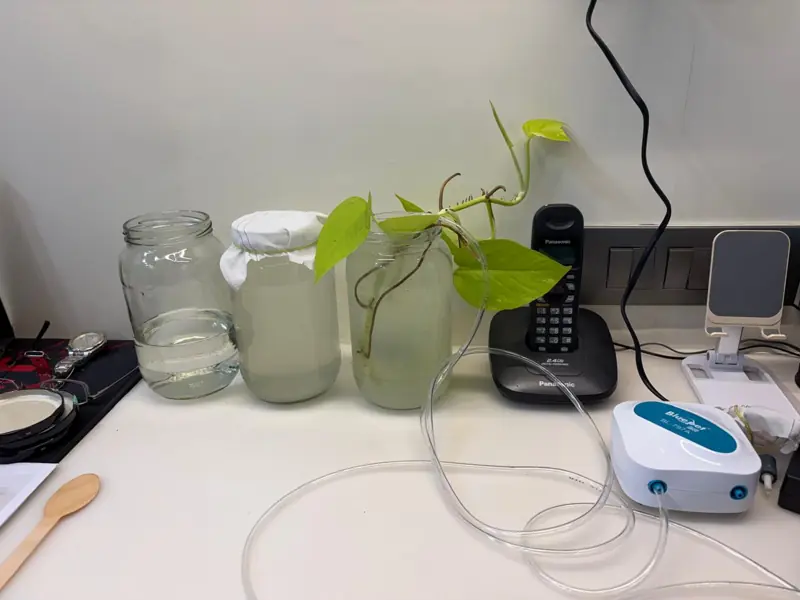
Day 2 — the control jar (middle) and the experiment jar (right). Jar 2 is so cloudy the aeration tube is barely visible.
The crossover
Surprisingly, Jar 2 started out worse than the control. On Day 0 its odour scored 5, against 4 for the control. But between Days 2 and 3 the lines crossed. By Day 6, Jar 2 had dropped to an odour score of 1 and had become visibly clearer — the aeration tube could be seen again. Over the same period, the control jar got worse, growing a film on its surface and rising to an odour score of 4.5.
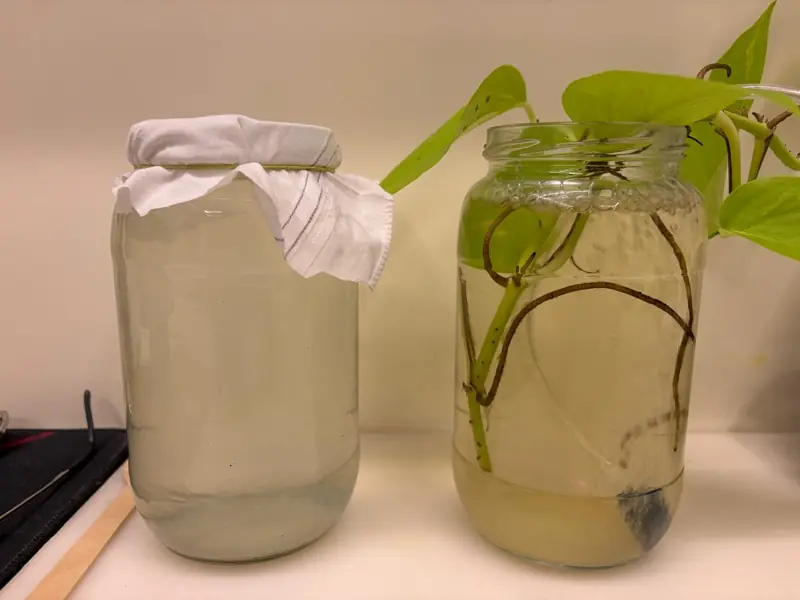
Day 6 — the experiment jar is clearing up while the control stays cloudy.
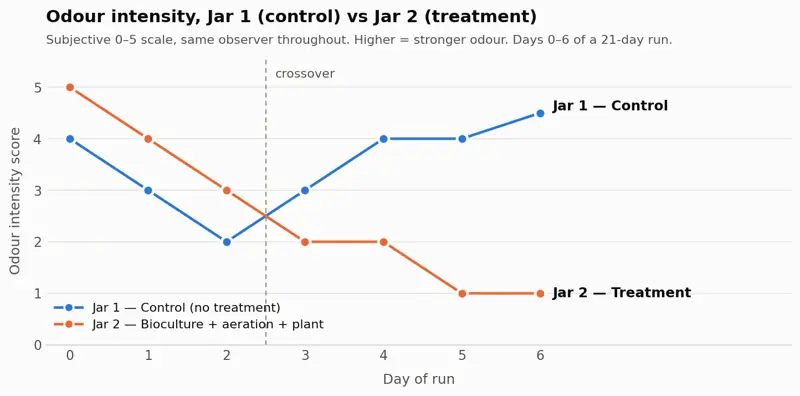
Odour scores for both jars, Days 0–6.
This crossover is the key finding. It suggests that adding bacteria alone does not help — and can briefly make things worse — until the oxygen supply catches up with the oxygen the bacteria need. That is the same problem that limited bacterial treatment on Mumbai’s Mithi River. Good water treatment isn’t about one magic ingredient; it’s about getting the whole system in balance.