Inside a Genetics Lab: My Internship at MILS Labassure and My First Published Paper
Nikita Suri
Inside a Genetics Lab: My Internship at MILS Labassure and My First Published Paper
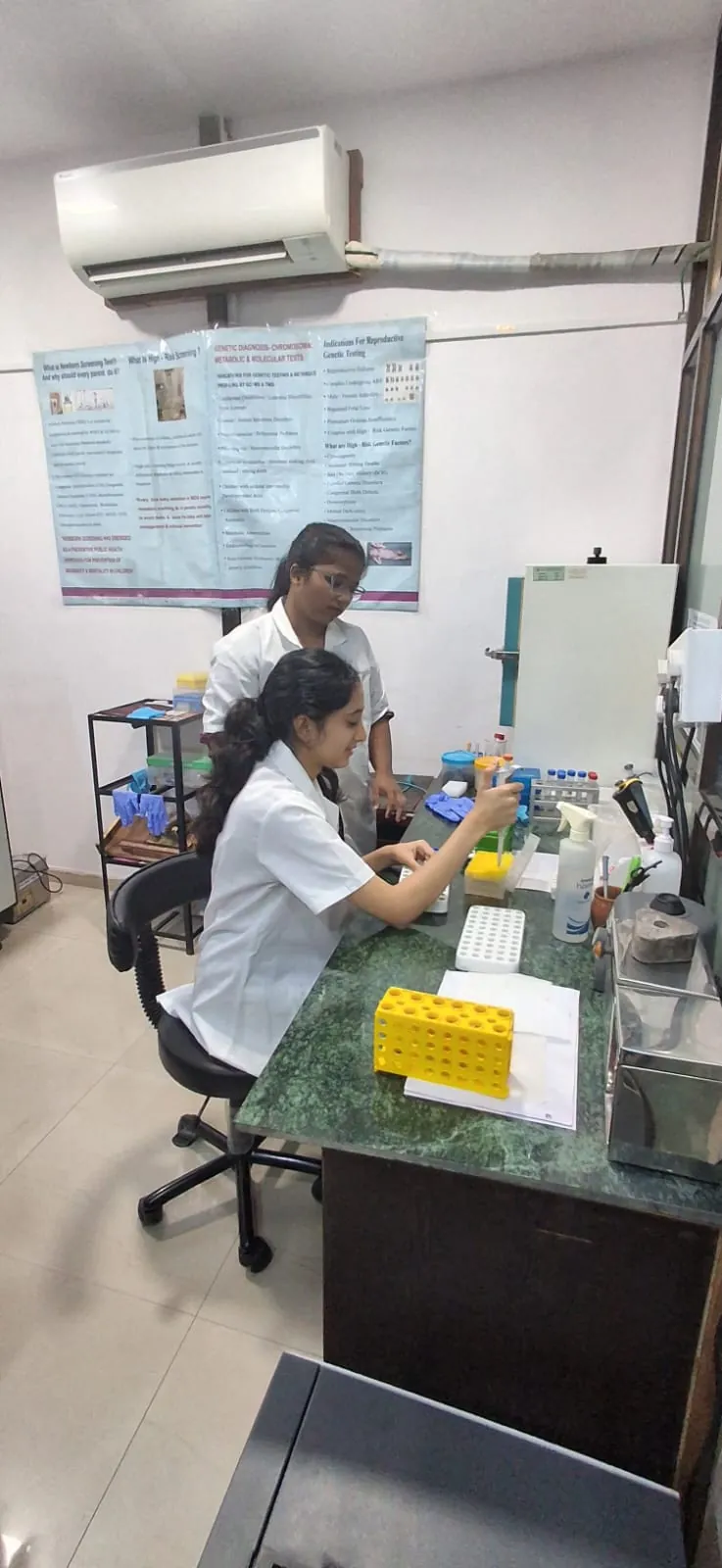
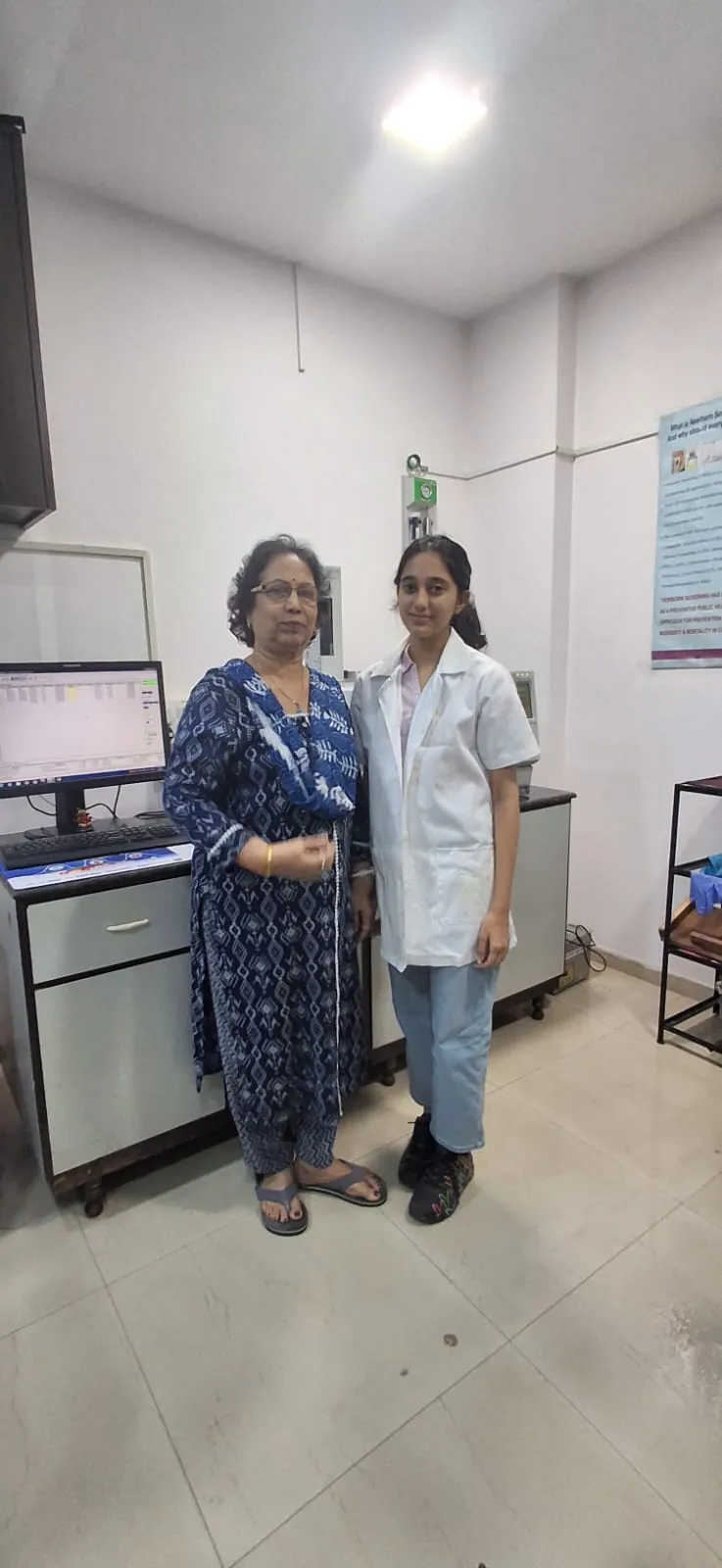
At the lab, and with my mentor, Dr Usha Dave (PhD).
I have always been curious about how traits pass from one generation to the next. This year I got to see genetics up close during an internship at MILS Labassure in Mumbai, under the guidance of Dr Usha Dave, the lab’s Research Director.
Learning the foundations
Dr Dave started me off with the basics of genetics and inheritance, alongside reading from the scientific literature. I then learnt about gene defects and how they are traced through families using pedigree charts — and put that into practice by solving a pedigree worksheet.
How a clinical lab really works
I was introduced to the Test Request Form (TRF), the document that starts every test, and learnt how clinical records are kept. I was shown around the GCMS (Gas Chromatography–Mass Spectrometry) lab, the equipment in it, and how samples are processed.
Safety came first. I attended sessions on bio-safety and waste management, the correct way to handle different chemicals, and the right protective clothing to wear in the lab.
Meeting patients
One of the most meaningful parts of the internship was sitting in on patient consultations with a doctor and taking notes. It showed me the human side of genetics. My mentor also explained why genetic counselling matters so much: families need clear, compassionate guidance to understand test results and make informed decisions.
Writing my first review paper
Alongside the lab work, I studied how to write a review paper and reviewed the literature on Down syndrome. The result was my paper, A Student’s Perspective: Down Syndrome, Its Genetic Inheritance, Karyotype and Prevention, co-authored with Pranali Manval and Dr Usha Dave and published in the Genetics and Molecular Research (GMR) journal.
The paper looks at prenatal screening and chromosomal testing through three high-risk pregnancies. In two of them, screening flagged a high risk but the confirmatory karyotype was normal — a reminder that screening tests can give false positives. It argues for universal prenatal screening, genetic counselling at the primary healthcare level, and affordable access to prenatal diagnostic tests in India.
You can find my paper here:
https://geneticsmr.com/index.php/gmr/article/view/3232
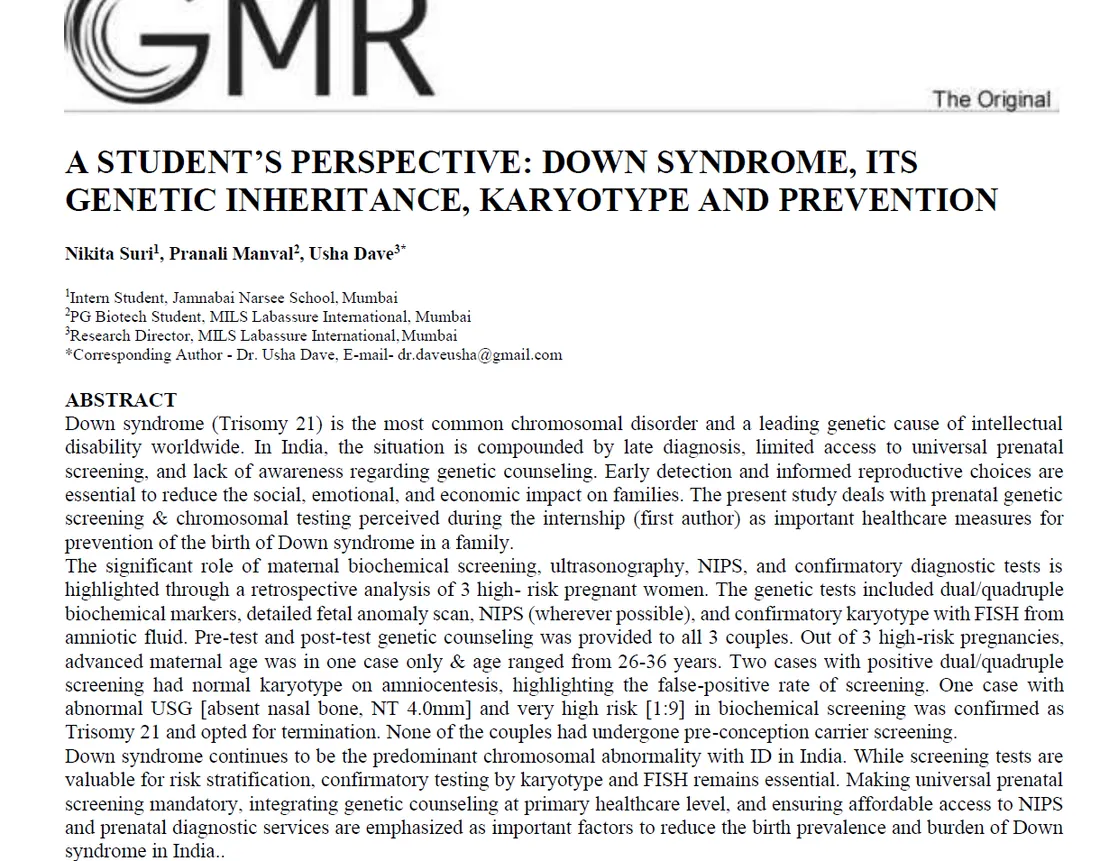
My paper as published in Genetics and Molecular Research.
Seeing my name in a scientific journal is something I won’t forget — and it has made me even more excited to keep exploring medical science.