Category: Uncategorized

  • Colours, Climate and Confidence: My Time with the Children of SOSVA Dharavi

    Nikita Suri

    Colours, Climate and Confidence: My Time with the Children of SOSVA Dharavi

    Some of my most rewarding hours this year were spent in a classroom in Dharavi. Through the SOSVA Dharavi Project, I volunteered with a group of children, and each session mixed learning with art, stories and performance.

    Mandala art: an ancient practice for focused minds

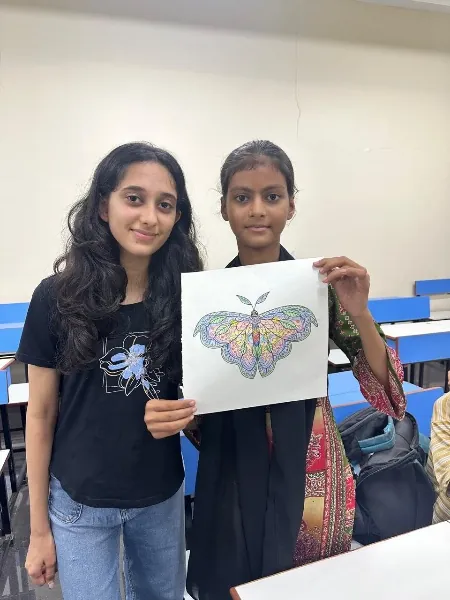
    We began with Mandala art. I told the children how it originated in India and travelled with Buddhist monks across East Asia. We talked about why it is more than just pretty patterns: drawing a mandala builds focus and concentration, and it takes patience and discipline to finish one. Then came the best part — the children picked up their colours and filled in mandala pages on their own. The results were bright, bold and beautiful.
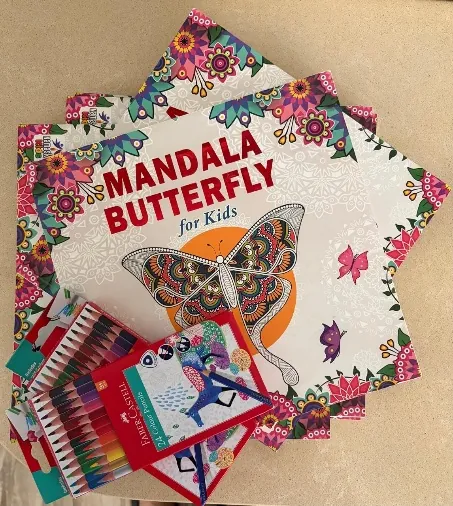
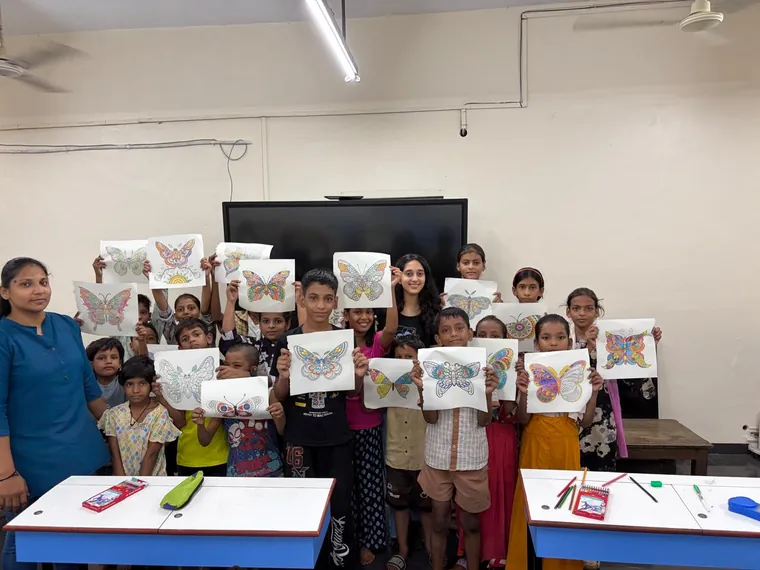
    Children colouring mandala designs
    Children colouring mandala designs
    Children colouring mandala designs

    Children colouring their own mandala designs.

    Every drop counts: the water cycle

    In our next session, we explored the water cycle and why conserving water matters. The children drew pictures and recited poems about the summer heatwave, the journey of water from clouds to rain, and how planting trees can help fight climate change.
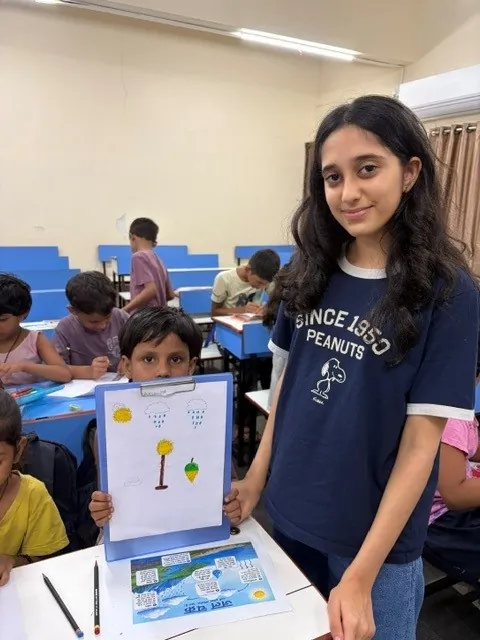
    Drawings and poems about the water cycle

    Drawings and poems about the water cycle and the monsoon.

    Small habits, big impact: climate action

    We then talked about climate change in a way that felt close to home. Using pictures, poems and stories, I explained greenhouse gases and simple climate-friendly habits: separating wet and dry garbage, turning kitchen waste into compost, and carpooling. The children read out their own poems and acted out a short skit on the theme.

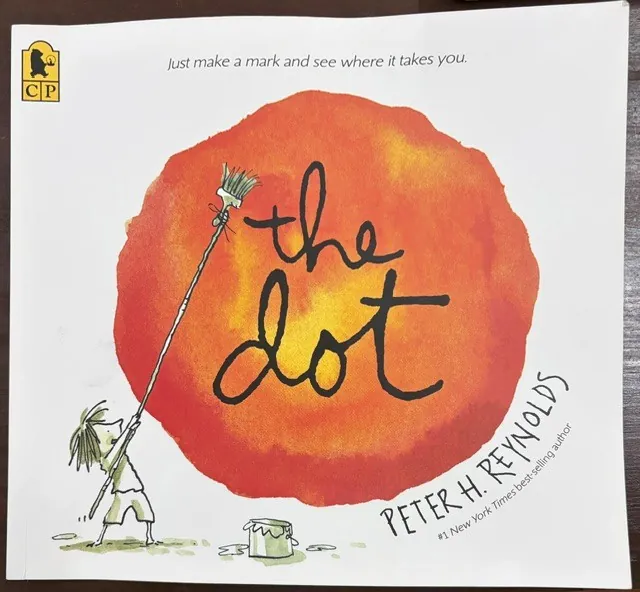
    To end the session, I read The Dot by Peter H. Reynolds — a story about a girl who believes she can’t draw, until one small dot changes everything. We talked about its message: every big creation starts with a single, brave first mark.
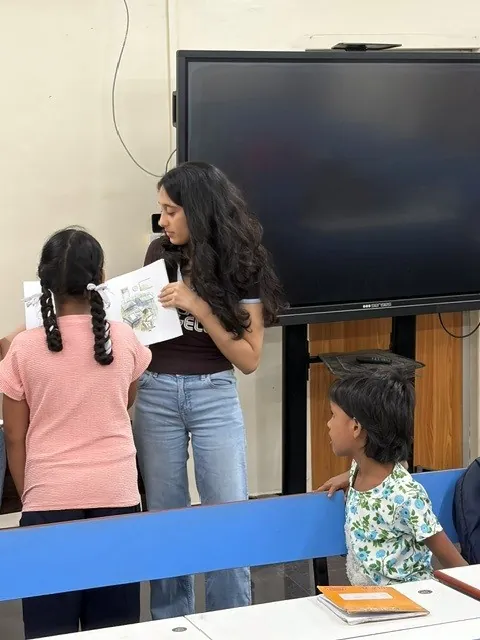
    Storytelling and poems on climate action
    Storytelling and poems on climate action

    Storytelling, poems and a skit on climate action.

    Taking the stage

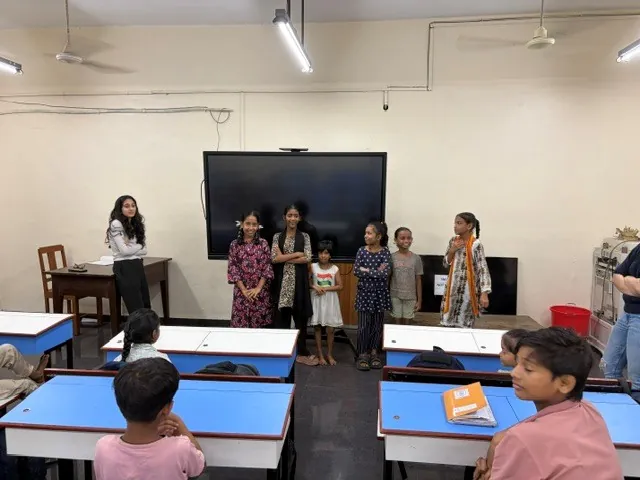
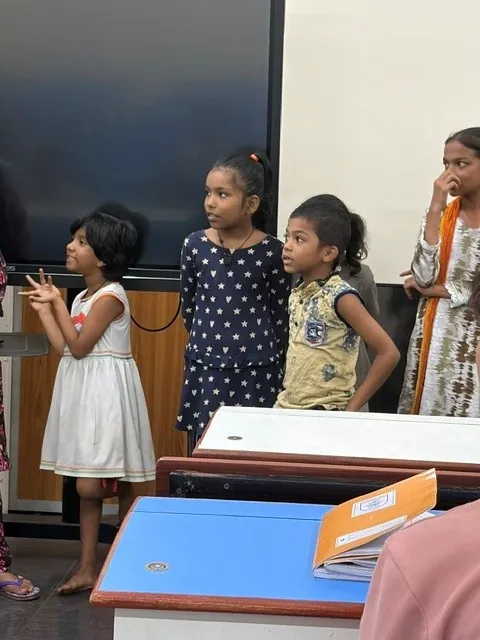
    Some sessions belonged entirely to the children. They sang songs and danced, some solo and some in groups, in front of the whole class. Watching shy faces turn into confident performers was the highlight of the project for me.
    Children performing for their class
    Children performing for their class

    The children performing songs and dances for their class.

    What I took away

    I went in to teach, but I learnt just as much: that curiosity is universal, that art and stories make big ideas easy to grasp, and that a little encouragement goes a long way.
  • Inside a Genetics Lab: My Internship at MILS Labassure and My First Published Paper

    Nikita Suri

    Inside a Genetics Lab: My Internship at MILS Labassure and My First Published Paper

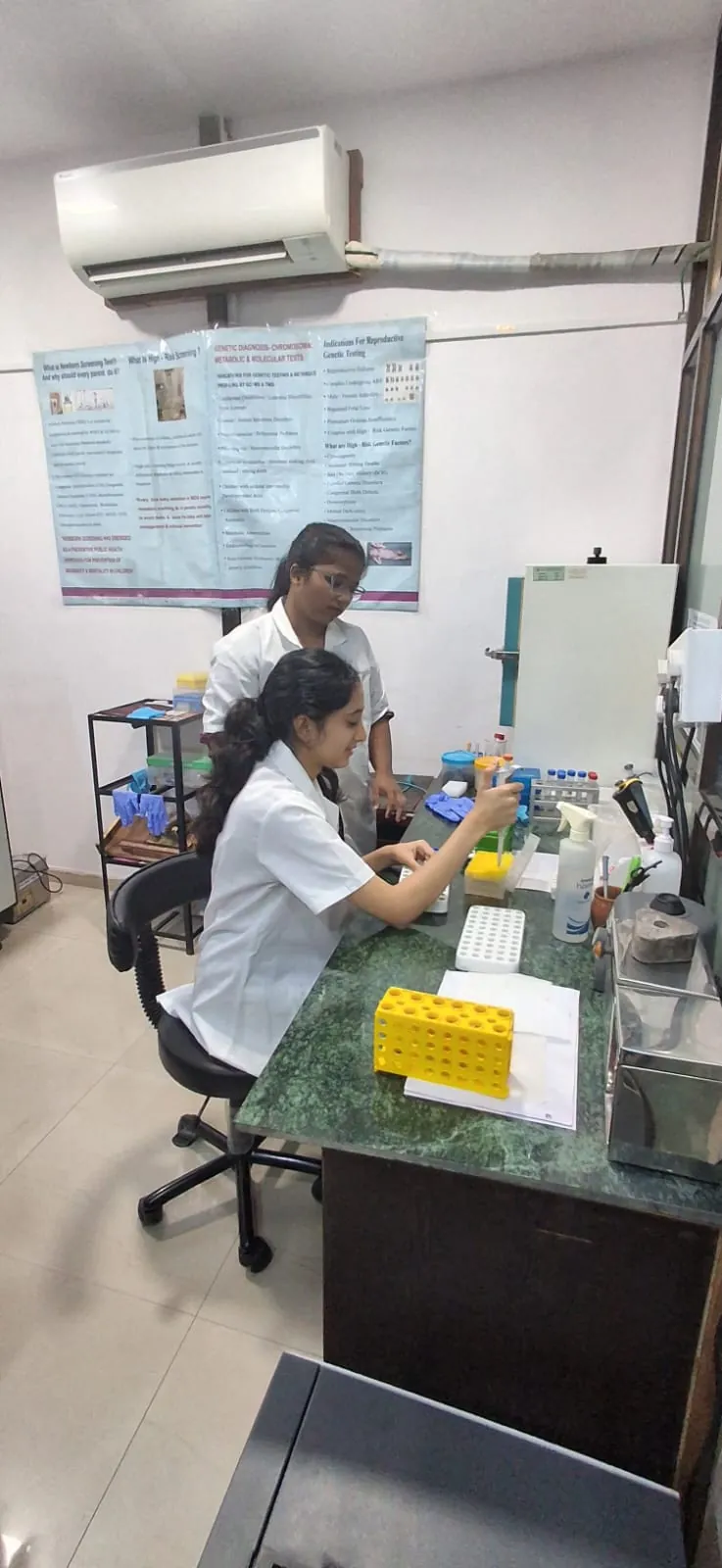
    At the lab
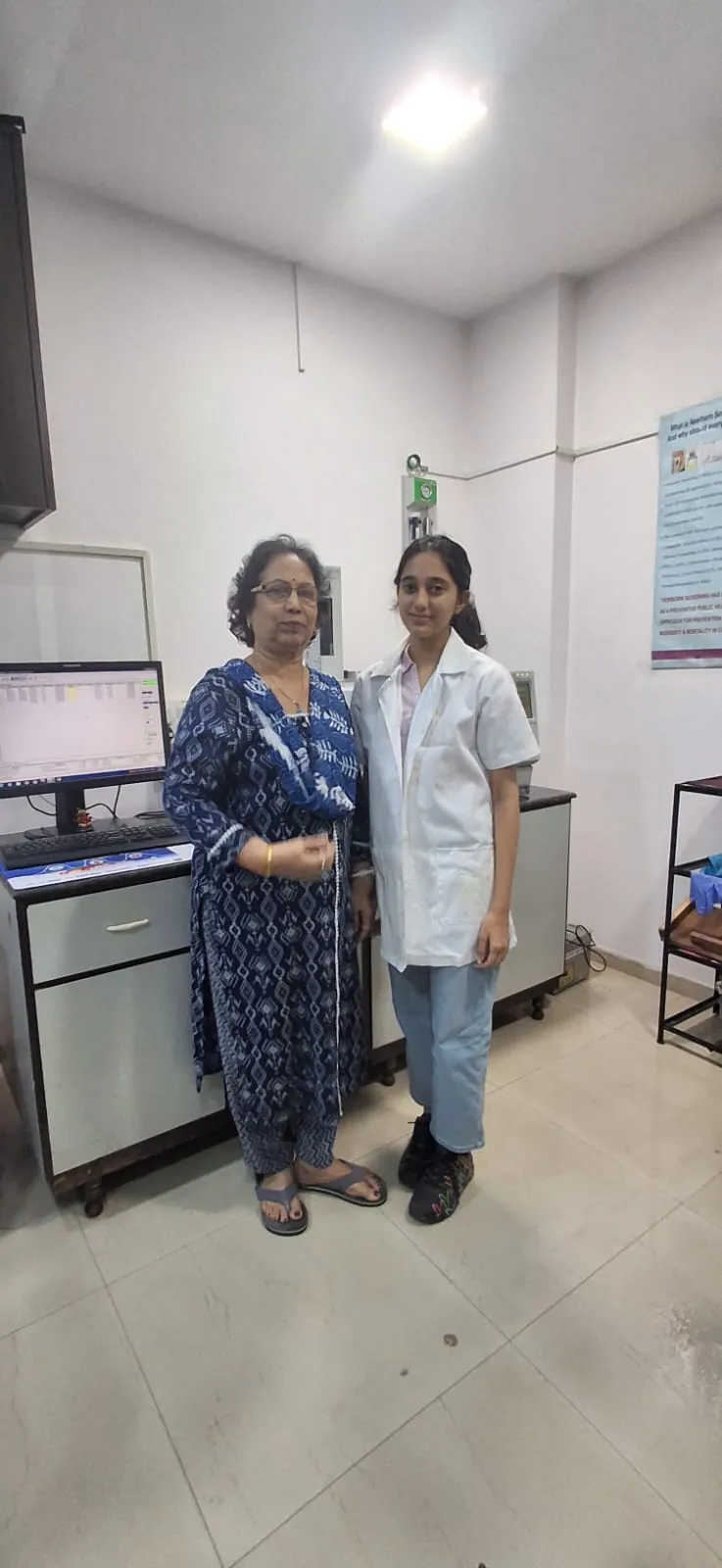
    With mentor Dr Usha Dave

    At the lab, and with my mentor, Dr Usha Dave (PhD).

    I have always been curious about how traits pass from one generation to the next. This year I got to see genetics up close during an internship at MILS Labassure in Mumbai, under the guidance of Dr Usha Dave, the lab’s Research Director.

    Learning the foundations

    Dr Dave started me off with the basics of genetics and inheritance, alongside reading from the scientific literature. I then learnt about gene defects and how they are traced through families using pedigree charts — and put that into practice by solving a pedigree worksheet.

    How a clinical lab really works

    I was introduced to the Test Request Form (TRF), the document that starts every test, and learnt how clinical records are kept. I was shown around the GCMS (Gas Chromatography–Mass Spectrometry) lab, the equipment in it, and how samples are processed.

    Safety came first. I attended sessions on bio-safety and waste management, the correct way to handle different chemicals, and the right protective clothing to wear in the lab.

    Meeting patients

    One of the most meaningful parts of the internship was sitting in on patient consultations with a doctor and taking notes. It showed me the human side of genetics. My mentor also explained why genetic counselling matters so much: families need clear, compassionate guidance to understand test results and make informed decisions.

    Writing my first review paper

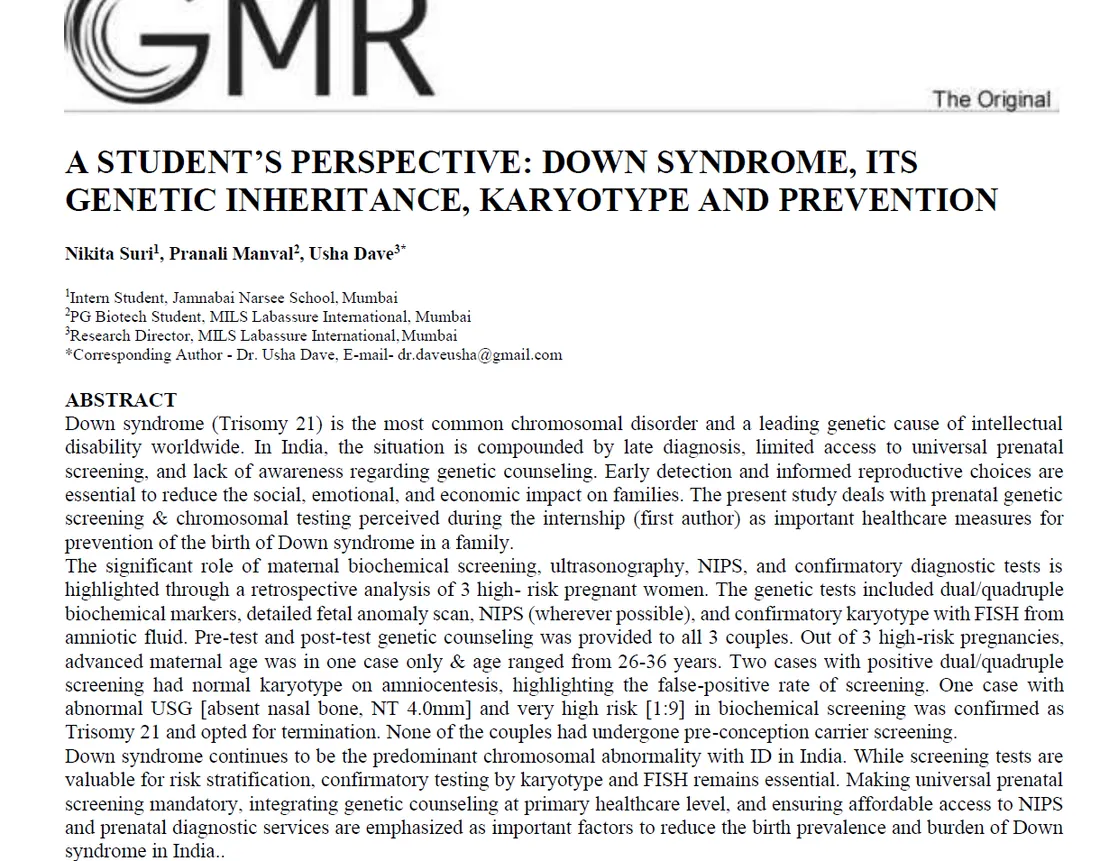
    Alongside the lab work, I studied how to write a review paper and reviewed the literature on Down syndrome. The result was my paper, A Student’s Perspective: Down Syndrome, Its Genetic Inheritance, Karyotype and Prevention, co-authored with Pranali Manval and Dr Usha Dave and published in the Genetics and Molecular Research (GMR) journal.

    The paper looks at prenatal screening and chromosomal testing through three high-risk pregnancies. In two of them, screening flagged a high risk but the confirmatory karyotype was normal — a reminder that screening tests can give false positives. It argues for universal prenatal screening, genetic counselling at the primary healthcare level, and affordable access to prenatal diagnostic tests in India.

    You can find my paper here:

    https://geneticsmr.com/index.php/gmr/article/view/3232

    My paper as published in Genetics and Molecular Research

    My paper as published in Genetics and Molecular Research.

    Seeing my name in a scientific journal is something I won’t forget — and it has made me even more excited to keep exploring medical science.

  • What’s Really in Our Water? Two Home Experiments in Water Purification

    Nikita Suri

    What’s Really in Our Water? Two Home Experiments in Water Purification

    Water is something we use every day without thinking about it. I wanted to understand it better, so I carried out two projects at home: one to compare different types of water, and one to clean polluted water using nature’s own tools.

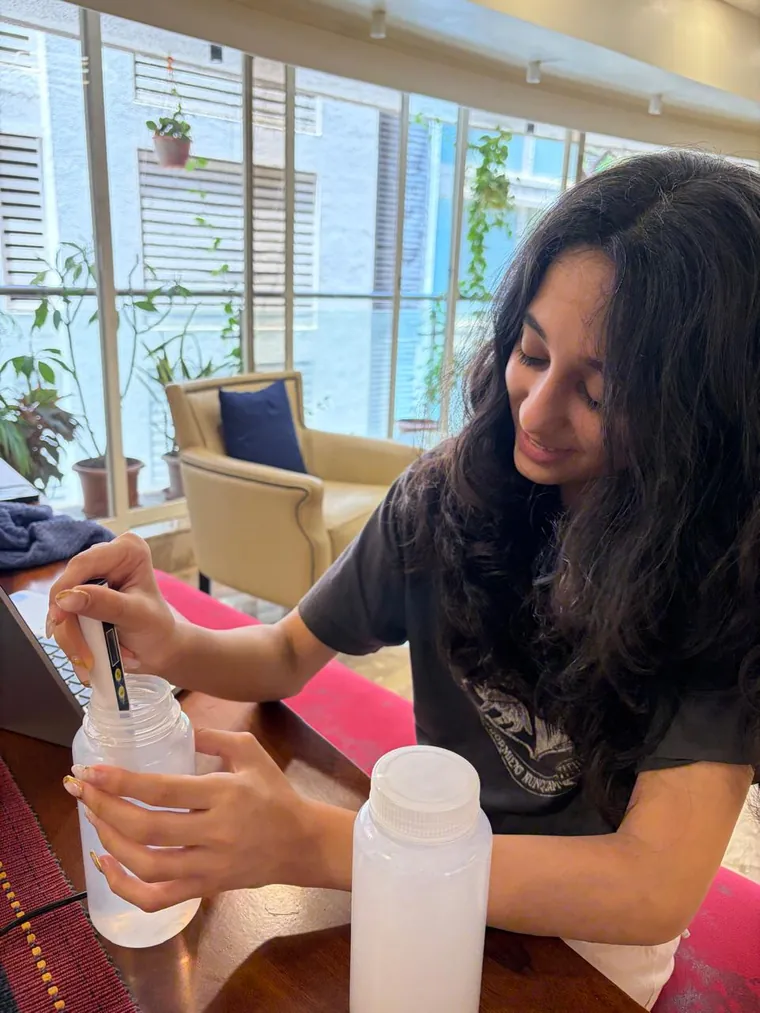
    Setting up the water tests at home

    Setting up my water tests at home.

    Experiment 1: Comparing five kinds of water

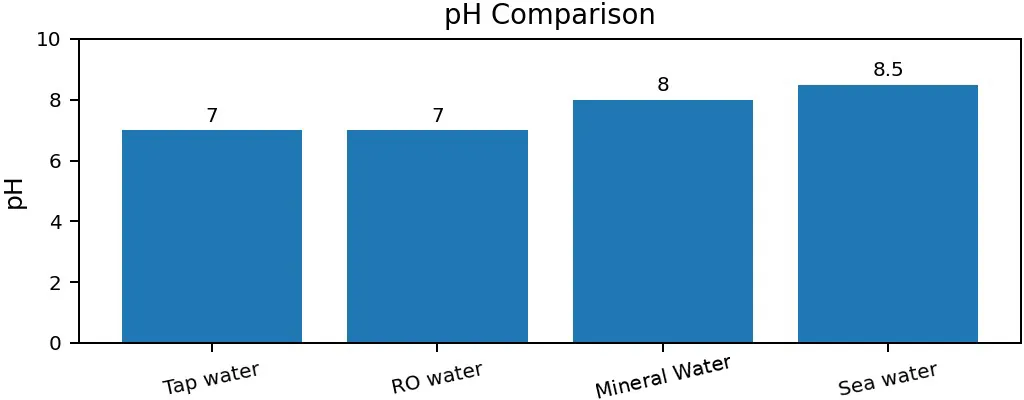
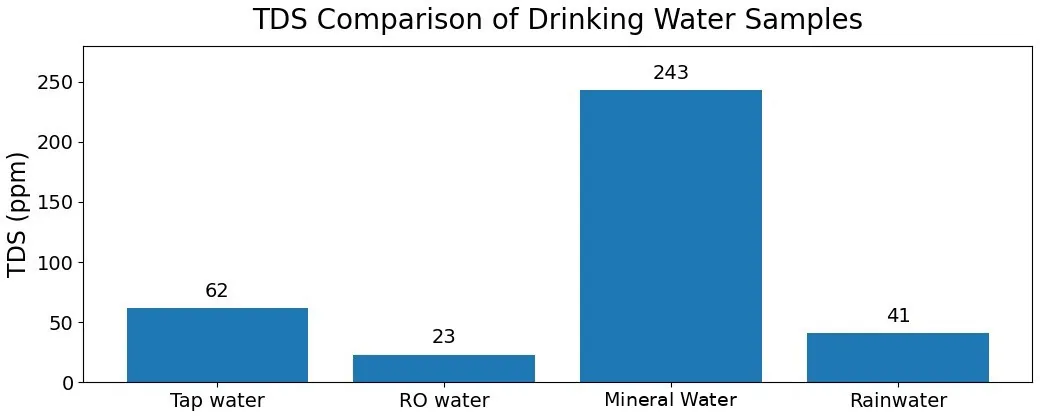
    I collected tap water from home, RO (reverse osmosis) water, bottled mineral water, seawater and rainwater. For each one I recorded colour, odour, pH, sediment, how well soap lathered, and Total Dissolved Solids (TDS).

    SamplepHTDS (ppm)
    Tap water762
    RO water723
    Mineral water8243
    Rainwater–41
    Seawater8.5–
    pH comparison chart
    TDS comparison chart

    pH and TDS results for each sample.

    The result that made me check twice

    I expected mineral water to come out on top. So when our tap water showed a TDS of 62 ppm and the bottled water 243 ppm, I checked the labels twice. For a few minutes, I thought I had proved that tap water was better.

    Then I read up on what TDS actually measures. It is not a safety score. It measures everything dissolved in the water — and many of those substances are useful minerals. My tests also couldn’t detect bacteria, viruses, heavy metals or other contaminants. The numbers hadn’t changed, but my understanding of them had. It was my biggest lesson: data only means something when you know what it measures.

    Experiment 2: Letting nature clean the water

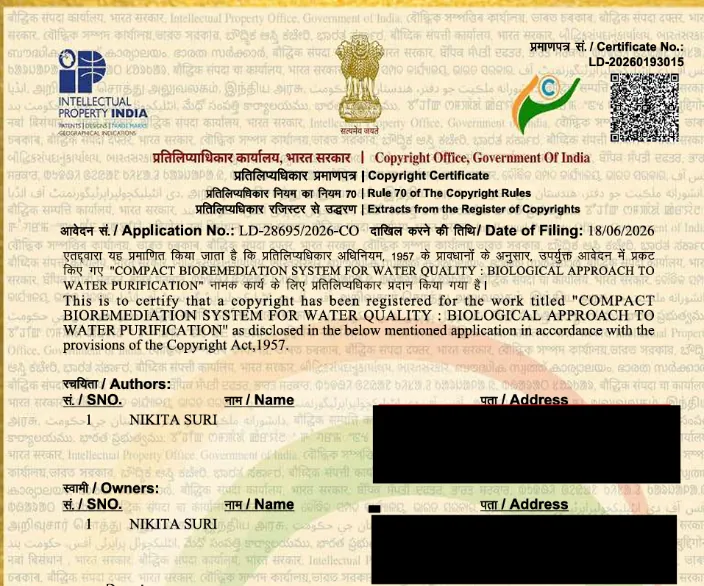
    That lesson led to my passion project, Compact Bioremediation System for Water Quality: Biological Approach to Water Purification, which is now filed with the Copyright Office, Government of India.

    Copyright certificate from the Copyright Office, Government of India

    My copyright certificate from the Copyright Office, Government of India.

    The problem is close to home. All four of Mumbai’s rivers remain in the Central Pollution Control Board’s most polluted category, despite more than a decade of restoration spending. I wanted to test, on a small scale, whether a combined biological treatment could help.

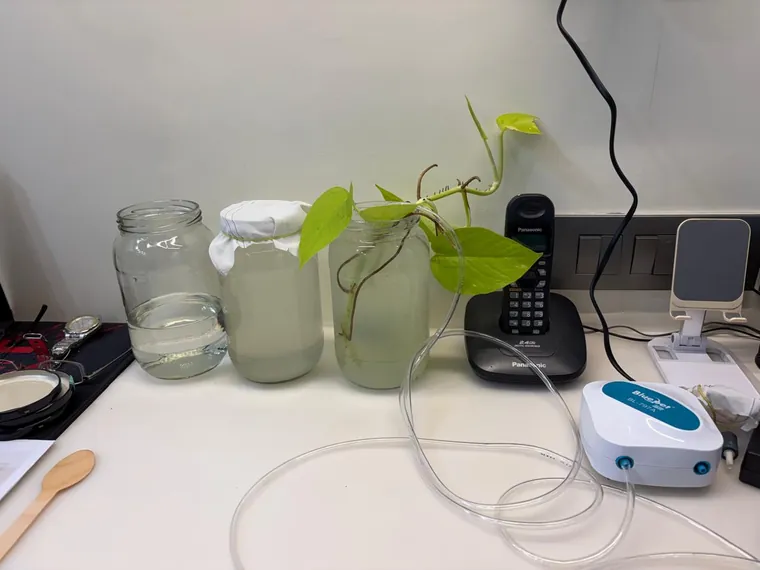
    I filled two jars with 800 mL each of the same synthetic wastewater, made with dechlorinated water:

    • Jar 1 (control): left untreated.
    • Jar 2 (experiment): given a commercial mixed bioculture (helpful bacteria), continuous aeration from a small pump, and a rooted cutting of a money plant (Epipremnum aureum).

    Every day I scored the cloudiness (turbidity) and smell of each jar on a fixed scale.

    Day 2: the control jar and the experiment jar

    Day 2 — the control jar (middle) and the experiment jar (right). Jar 2 is so cloudy the aeration tube is barely visible.

    The crossover

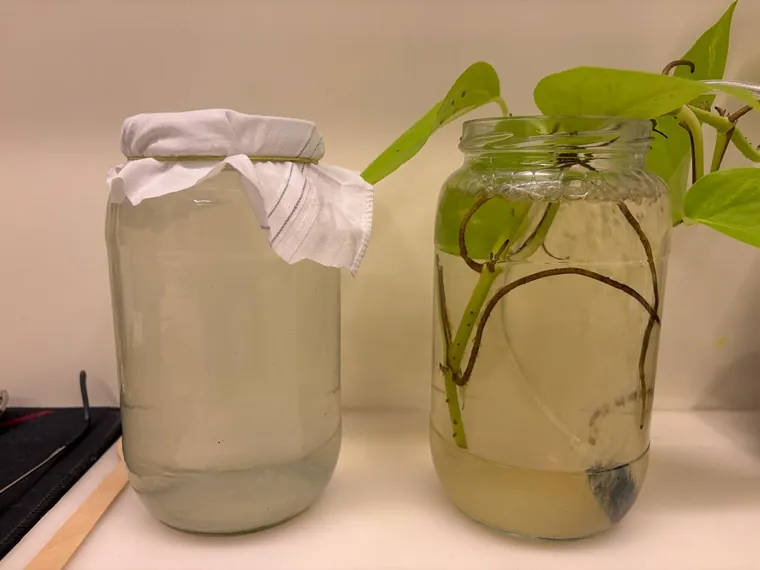
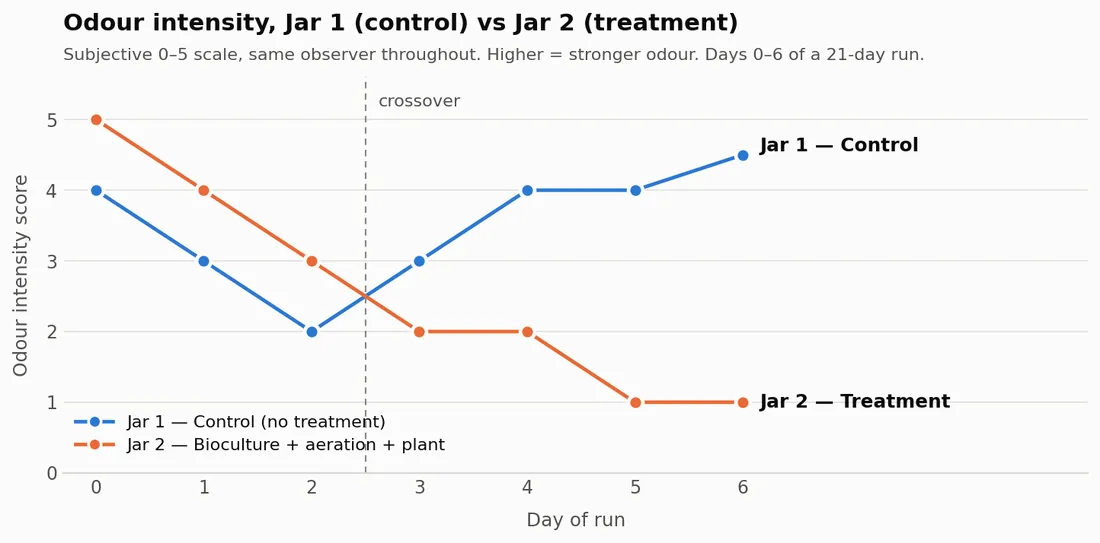
    Surprisingly, Jar 2 started out worse than the control. On Day 0 its odour scored 5, against 4 for the control. But between Days 2 and 3 the lines crossed. By Day 6, Jar 2 had dropped to an odour score of 1 and had become visibly clearer — the aeration tube could be seen again. Over the same period, the control jar got worse, growing a film on its surface and rising to an odour score of 4.5.

    Day 6: the experiment jar is clearing up

    Day 6 — the experiment jar is clearing up while the control stays cloudy.

    Odour scores for both jars, Days 0 to 6

    Odour scores for both jars, Days 0–6.

    This crossover is the key finding. It suggests that adding bacteria alone does not help — and can briefly make things worse — until the oxygen supply catches up with the oxygen the bacteria need. That is the same problem that limited bacterial treatment on Mumbai’s Mithi River. Good water treatment isn’t about one magic ingredient; it’s about getting the whole system in balance.

  • From Idea to Bookshelf: My Mystery Thriller, The Bitter Brew

    Nikita Suri

    From Idea to Bookshelf: My Mystery Thriller, The Bitter Brew

    Science isn’t my only passion — I love a good mystery too. Frieda McFadden is one of my favourite authors, and I loved Riley Sager’s “The Only One Left”. So I decided to write one of my own.

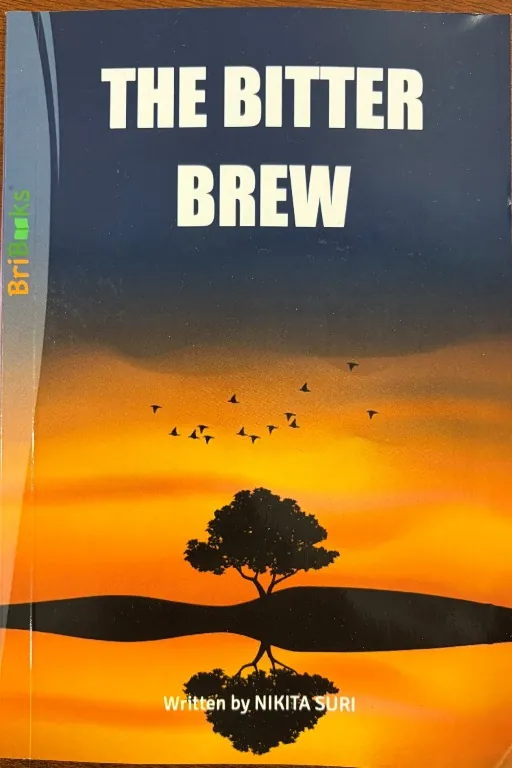
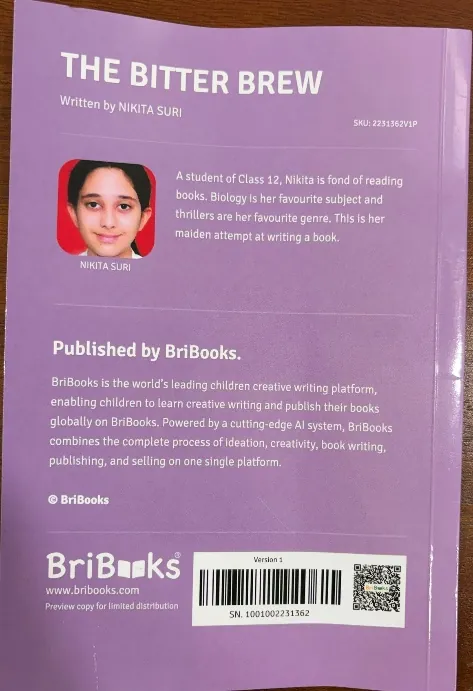
    The Bitter Brew is a short thriller mystery that I wrote and that has now been published by Bribooks. Taking an idea from a first spark to a finished, printed book taught me a lot about planning a plot, building suspense and, above all, finishing what I start.

    The Bitter Brew front cover
    The Bitter Brew back cover

    The Bitter Brew, published by Bribooks.

    If you enjoy a twisty mystery, I’d love for you to read it.

  • Hello world!

    Welcome to WordPress. This is your first post. Edit or delete it, then start writing!